 English
 русский
 Français
 Español
 عربى
عربى
The oil-immersed on-load tap-changing distribution transformer adopts a high-quality laminated silicon steel core and oxygen-free copper windings with a stable structure and strong short-circuit resis...
See Details

Content
An oil-immersed transformer uses insulating oil to do two jobs inside one tank: block electrical breakdown between the windings and pull heat away from the core. That combination is why oil-filled units remain the standard choice anywhere a system needs to move large amounts of power reliably, from utility substations to heavy industrial plants.
Core Conclusion: A properly specified and maintained oil-immersed transformer can run 30 to 40 years in continuous service, at a lower installed cost per kVA than any comparable dry-type alternative above roughly 1 MVA.
The sections below break down the engineering behind that number, show where the design outperforms alternatives, and lay out a practical framework for maintenance, compliance, and procurement — drawing on manufacturing experience from Taizhou Haitian Electric Manufacture Co., Ltd. in producing and testing oil-immersed units for export markets.
Inside the tank, mineral or synthetic oil surrounds the core and windings. Because oil has a dielectric strength far above air, it lets conductors sit closer together without arcing — which is part of why oil-immersed designs can be more compact per MVA than open-air equivalents. At the same time, the oil is constantly moving, absorbing heat at the windings and releasing it through radiators or cooling tubes.
New mineral oil typically tests above 30 kV breakdown voltage. A drop below 23 kV signals contamination or moisture and triggers corrective action under most utility specifications.
Oil carries heat from the windings to external radiators far more effectively than air, letting the transformer sustain higher continuous loads without exceeding hot-spot temperature limits.
In the event of an internal fault, oil helps quench arcing faster than air, reducing the chance that a minor fault escalates into a catastrophic failure.
Manufacturers rate cooling by how oil and air move through the unit. ONAN (Oil Natural, Air Natural) relies on convection alone and suits smaller distribution transformers. ONAF adds fans to push more air across the radiators, boosting capacity by roughly 25 to 35 percent over the same core-and-coil assembly. OFAF and OFWF add oil pumps, and in the case of OFWF, water cooling, for the largest power transformers used in generation plants.
Buyers deciding between oil-immersed and dry-type transformers usually weigh three factors: installation environment, load size, and fire-safety requirements. The comparison below reflects typical specifications used in procurement documents.
Comparison of oil-immersed and dry-type transformers across common procurement factors
Procurement teams often focus on price and rated capacity, but long-term reliability data tells a different story about where oil-immersed transformer failures actually originate. Industry field studies consistently point to insulation degradation and moisture ingress as the leading causes, not core or winding defects.
Approximate distribution of oil-immersed transformer failure root causes, based on common utility field-return analysis
The practical implication is straightforward: routine oil testing catches more failures than any structural inspection, because the two leading causes both show up first as changes in the oil itself, long before they affect performance.
Demand for oil-immersed transformers is not evenly spread across sectors. Utility and grid infrastructure remains the largest buyer segment, but industrial and renewable energy demand has grown steadily as grid connection projects for solar and wind farms expand.
Utility & Grid Infrastructure — 42%
Industrial & Manufacturing Plants — 26%
Renewable Energy (Solar/Wind) — 17%
Commercial & Data Centers — 15%
Estimated share of oil-immersed transformer demand by end-use sector
Choosing the right oil-immersed transformer is less about picking the highest rating available and more about matching the design to the load profile, ambient conditions, and future expansion plans. The process below reflects how manufacturers like Taizhou Haitian Electric Manufacture Co., Ltd. typically guide buyers through specification.
Determine peak demand, average load factor, and whether the site expects future capacity growth within 5–10 years.
Ambient temperature, altitude, and available space determine whether ONAN cooling is sufficient or ONAF/OFAF is needed.
Mineral oil suits most standard applications; ester-based fluids are worth considering for fire-sensitive or environmentally regulated sites.
Insist on routine test data — impedance, no-load loss, load loss, and dielectric tests — before shipment, not just after installation.
Run an initial DGA and insulation resistance test within the first month of operation to establish a baseline for future comparisons.
A lower-cost transformer with poor cooling efficiency or thinner insulation can cost more over its lifetime once energy losses and premature replacement are factored in. No-load losses run continuously for the life of the unit, so a difference of even 0.1% in efficiency compounds into a meaningful sum on a 20-year horizon for a transformer running near-continuous load.
35 yrs
Average service life with scheduled oil testing and maintenance
15–20 yrs
Typical life under reactive, maintenance-only-after-failure practices
3–5x
Cost multiple of emergency replacement versus planned maintenance
Factoring total cost of ownership — purchase price, energy losses, and maintenance over 20 to 30 years — consistently shows that a well-built oil-immersed transformer with a documented maintenance plan delivers a stronger return than the lowest bid on paper.
Most standards bodies, including IEEE and IEC guidance on transformer maintenance, converge on similar testing intervals. The schedule below reflects common practice for units operating under normal duty cycles.
Recommended testing intervals and action thresholds for oil-immersed transformer maintenance
Beyond routine testing, compliance documentation matters for insurance and regulatory audits. Keeping dated DGA trend records, not just single-point results, is what allows a fault to be caught while it is still developing rather than after it has already caused an outage.
With scheduled oil testing and timely repairs, most units reach 30 to 40 years of service. Units maintained only after visible failures often need replacement within 15 to 20 years.
ONAN relies on natural convection alone, while ONAF adds fans to push air across the radiators, typically increasing capacity by 25 to 35 percent on the same core-and-coil assembly.
Dissolved gas analysis every 6 to 12 months is standard for critical units, with additional dielectric strength and moisture testing performed annually.
It can be, but local fire codes typically require containment measures such as bund walls or oil-collection pits. Many indoor or high-rise installations opt for dry-type units instead to avoid these requirements.
Field data points to insulation aging and moisture ingress as the two leading causes, together accounting for roughly two-thirds of reported failures, ahead of overload stress or manufacturing defects.
New mineral oil tests above 30 kV. A result under 23 kV is generally treated as a threshold requiring filtration, dehydration, or oil replacement.
Yes, within limits. Oil's thermal mass allows short-term overloads without immediate damage, but sustained overloading accelerates insulation aging and shortens overall service life.
At minimum: no-load loss, load loss, impedance voltage, insulation resistance, and dielectric withstand test results, all documented against the applicable IEC or IEEE standard.
An oil-immersed transformer earns its long service life through the combination of strong dielectric insulation and efficient cooling, but that lifespan is only realized when procurement decisions account for load profile and site conditions, and when maintenance follows a documented testing schedule rather than reacting to visible problems.
For buyers evaluating suppliers, request full factory test data, confirm the cooling class matches real operating conditions, and build oil testing into the maintenance budget from day one. Teams at Taizhou Haitian Electric Manufacture Co., Ltd. work with procurement teams through exactly this process — from load analysis to commissioning support — to make sure each oil-immersed transformer delivers its full rated lifespan in the field.
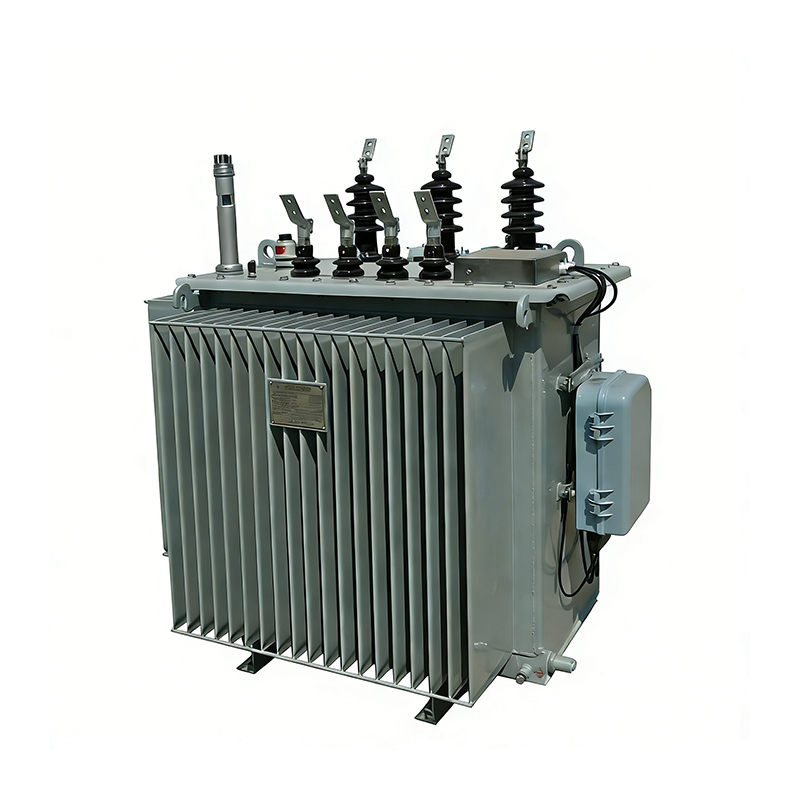
The oil-immersed on-load tap-changing distribution transformer adopts a high-quality laminated silicon steel core and oxygen-free copper windings with a stable structure and strong short-circuit resis...
See Details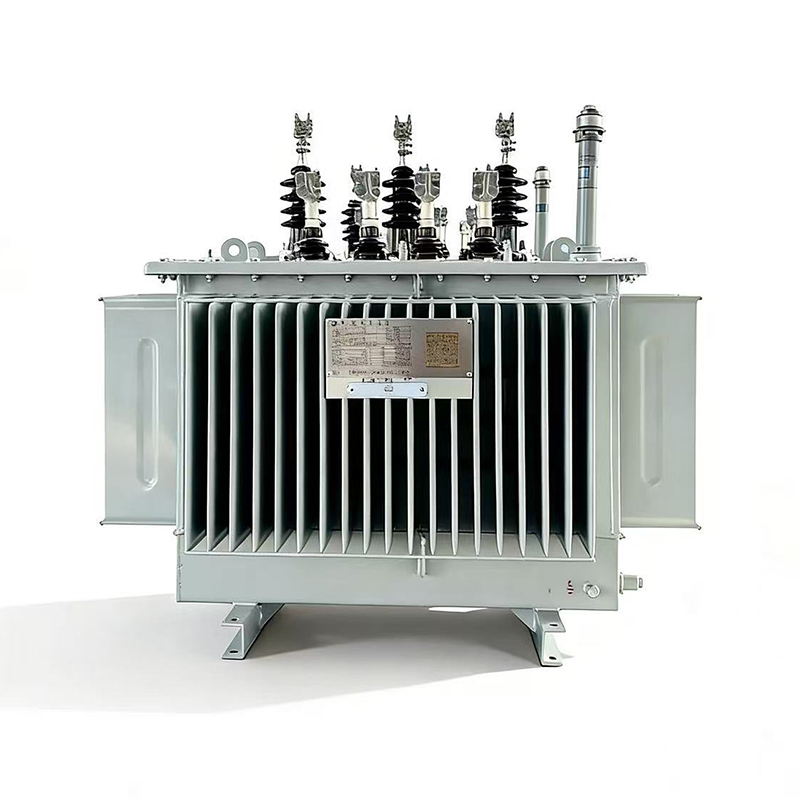
A laminated core distribution transformer is a classic power device applied to voltage conversion and power transmission. This transformer enjoys mature technical performance, high operation reliabili...
See Details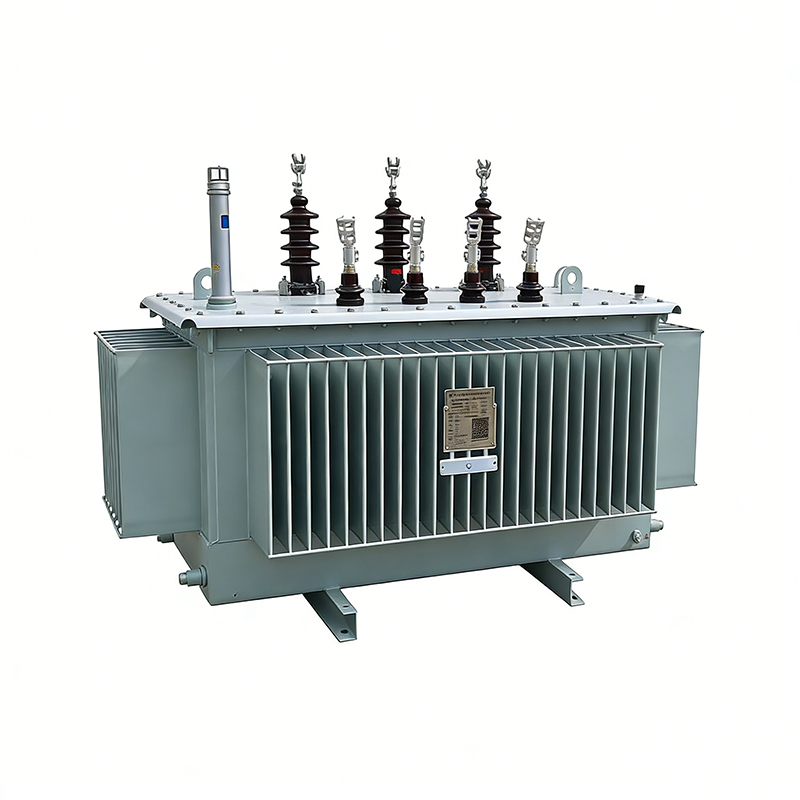
The amorphous alloy non-distribution transformer adopts an iron-based amorphous alloy wound core and a fully sealed oil-immersed corrugated oil tank structure. This transformer features extremely low ...
See Details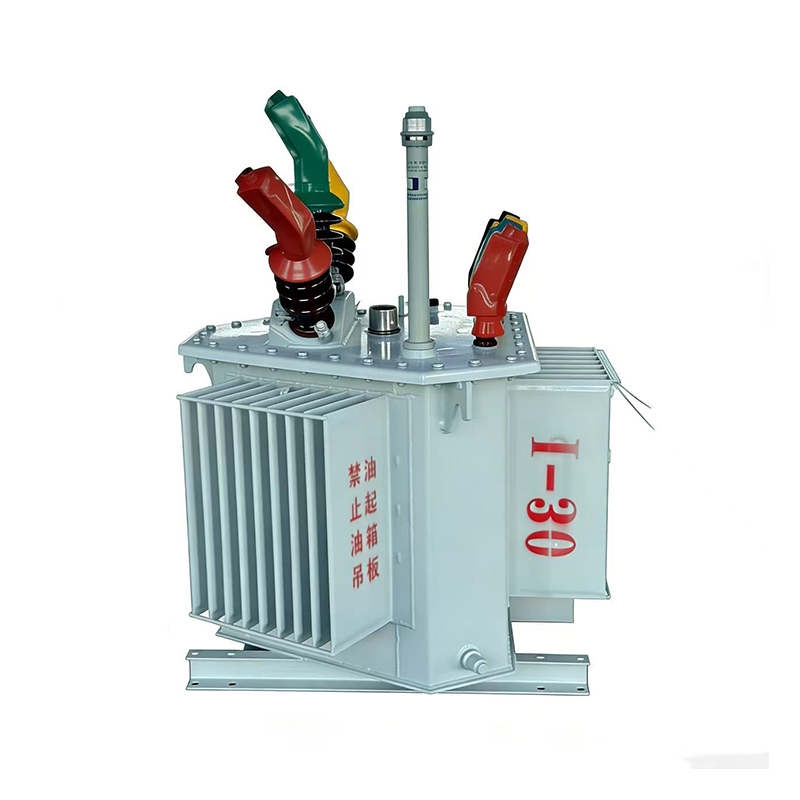
Three-dimensional Wound Core Distribution Transformer. The oil-immersed three-dimensional wound core distribution transformer adopts high-quality cold-rolled oriented silicon steel sheets formed throu...
See DetailsHey! Interested in staying in the loop? Sign up for our updates. We won't spam you, pinky promise.

Taizhou Haitian Electric Manufacture Co., Ltd.
