Why Vibration Fatigue at Winding Clamping Points Is a Distinct Failure Mode at Sea
A marine transformer experiences a fundamentally different mechanical stress pattern than a land-based unit, because engine-induced vibration and wave motion apply continuous, low-amplitude cyclic loading to the winding clamping structure rather than the occasional shock events land-based equipment might see. Over years of continuous operation, this repeated micro-movement can gradually loosen clamping bolts and compress the pressboard spacers that hold windings in position, even when the transformer shows no electrical symptoms of a problem. Once clamping pressure drops below design tolerance, windings gain enough freedom to move slightly during load changes, and that movement accelerates insulation wear at contact points that were never designed to experience friction.
Taizhou Haitian Electric Manufacture Co., Ltd. addresses this at the design stage by specifying clamping systems with vibration-resistant locking mechanisms rather than standard torque-based fastening, since periodic re-tightening during a vessel's operational life is far more difficult to schedule than shipboard equipment on land. This is a key reason marine transformer clamping design differs meaningfully from a standard industrial equivalent, even when both units carry the same electrical rating.
Water-Cooled Marine Transformer Design: Managing Confined Engine Room Heat Loads
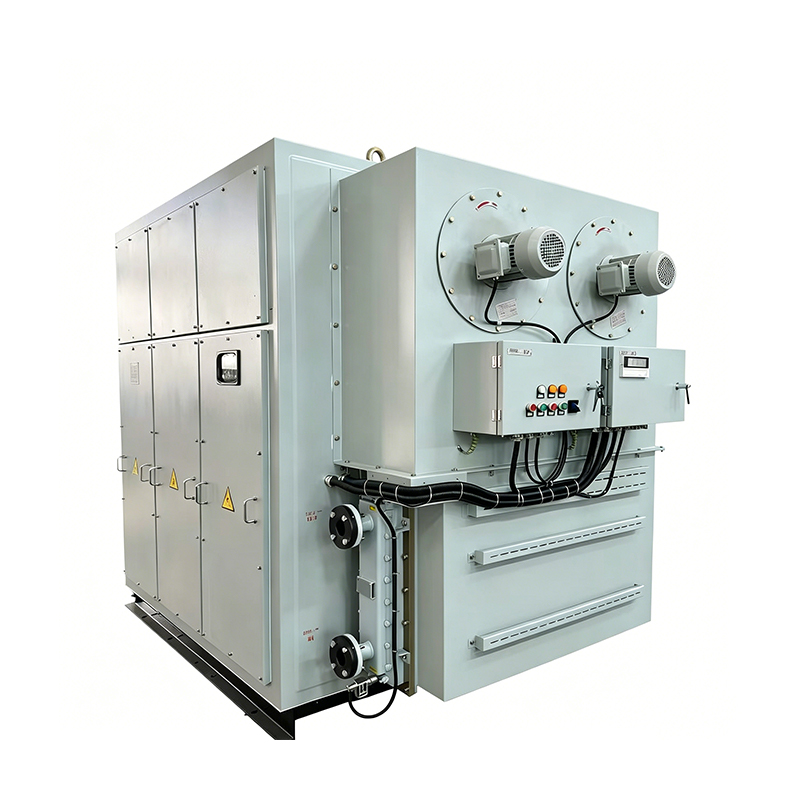
Engine room spaces on most vessels don't allow the airflow volume that air-cooled transformer designs depend on, which is why water-cooled marine transformer configurations are specified whenever ambient room temperature or space constraints make air cooling impractical. In this design, cooling water circulates through a heat exchanger integrated into the transformer's oil circuit, transferring heat away without requiring the large radiator surface area an air-cooled equivalent would need in the same footprint.
This approach introduces a maintenance consideration that engine room crews often overlook: the water side of the heat exchanger is vulnerable to biofouling and scale buildup, particularly when raw seawater is used as the cooling medium rather than a closed freshwater loop. Reduced heat transfer efficiency from fouling can silently push the transformer's operating temperature upward long before it triggers a protective alarm. As part of its main product range covering water-cooled marine and offshore platform transformers, Taizhou Haitian Electric Manufacture Co., Ltd. recommends heat exchanger inspection intervals tied to the vessel's cooling water source quality, rather than applying a single generic maintenance schedule across all cooling water types.
Factors That Accelerate Heat Exchanger Fouling
- Use of untreated raw seawater instead of a closed freshwater cooling loop
- Operation in warm tropical waters where biological growth accelerates
- Extended idle periods in port where water flow through the exchanger slows or stops
How Classification Society Type Approval Differs From Standard Factory Testing
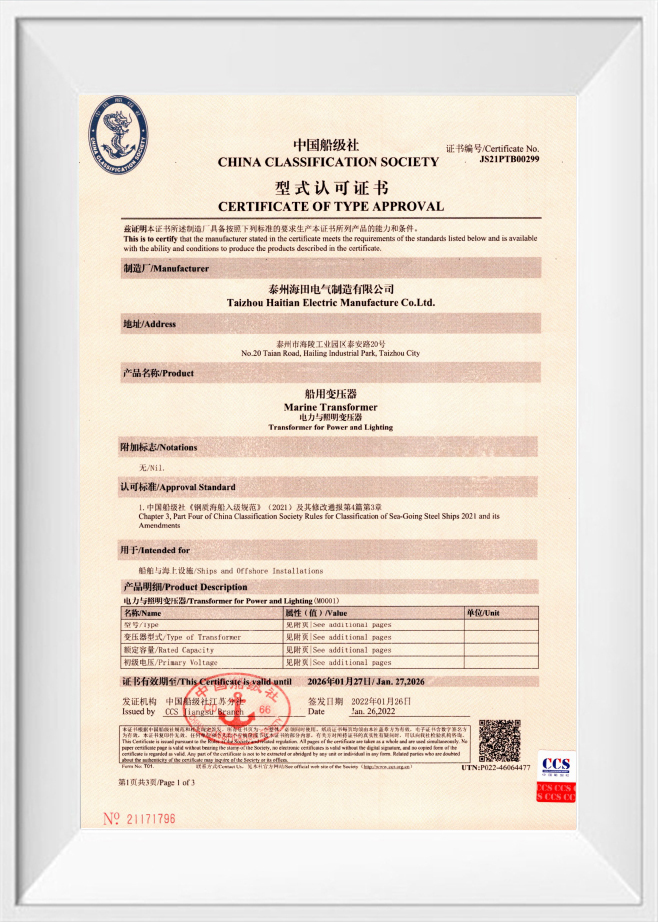
Standard factory acceptance testing confirms that an individual transformer unit meets its electrical specifications, but classification society type approval is a separate and more demanding process that validates the entire design against maritime-specific criteria, including shock resistance, inclination testing, and fire behavior under conditions that simply don't appear in land-based transformer standards. A design must pass type testing once, after which every unit built to that same design can be certified without repeating the full battery of destructive and environmental tests, provided production quality remains consistent with the approved design.
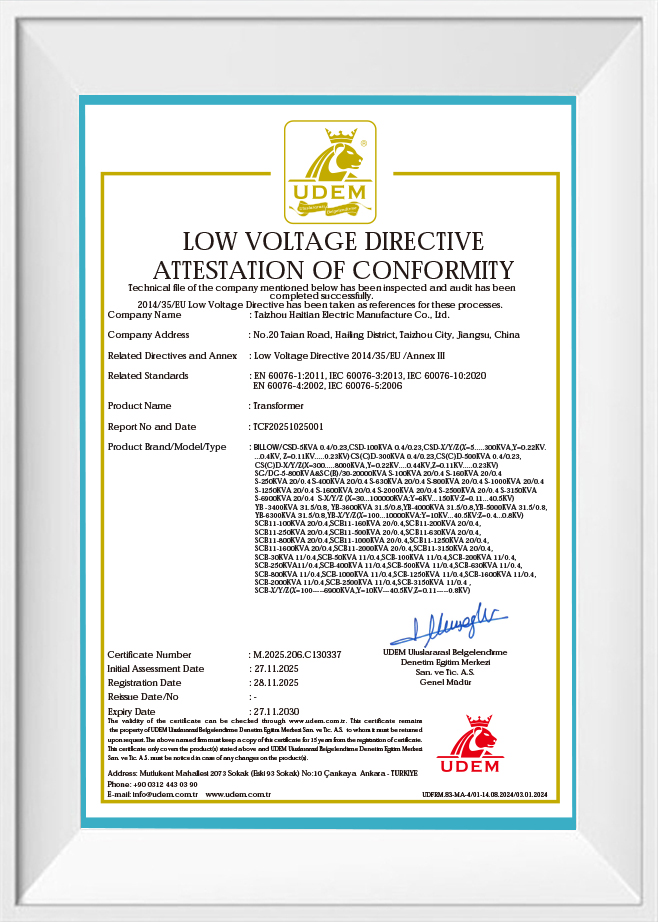
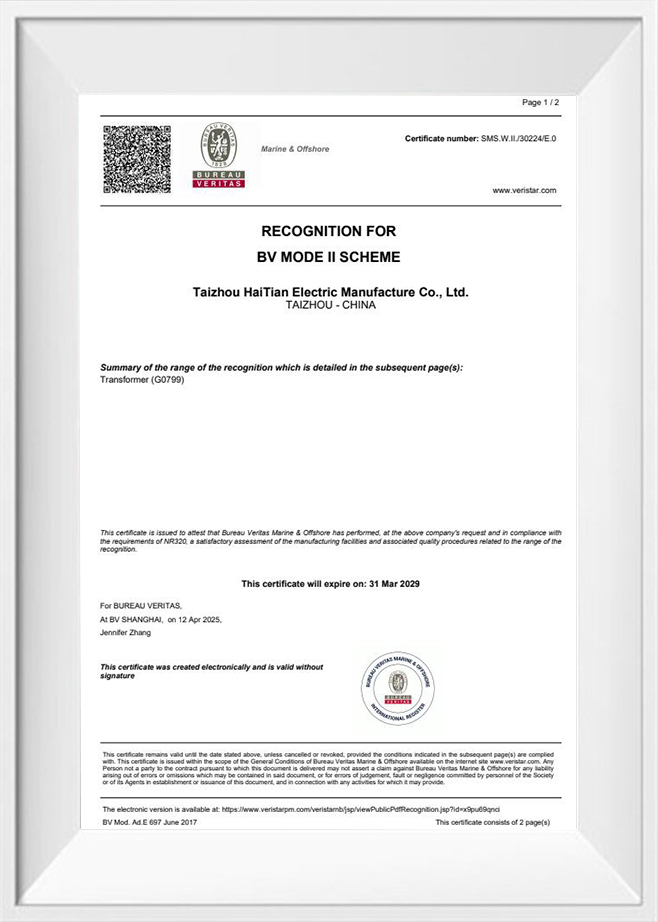
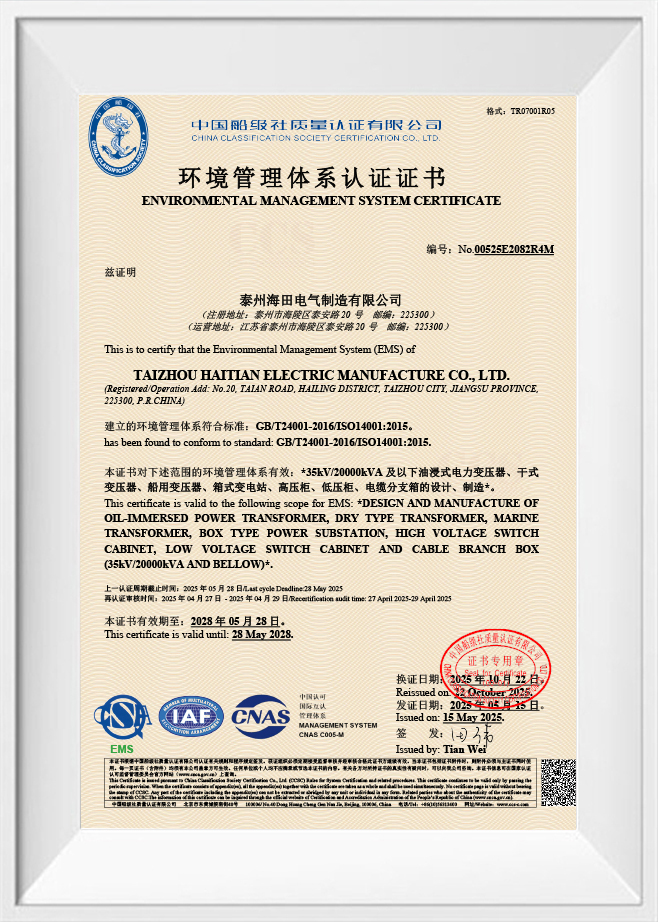
This distinction matters for procurement teams because a supplier offering a transformer that is merely IP-rated and painted with marine coating has not necessarily gone through classification society type approval, and vessels operating under classed status typically cannot legally install equipment lacking this certification. Taizhou Haitian Electric Manufacture Co., Ltd.'s marine products comply with IEC standards and hold CCS and international classification society certifications, reflecting design validation rather than surface-level marine adaptation of a standard industrial unit.
| Testing Type |
Scope |
Frequency |
| Factory acceptance test |
Electrical performance of individual unit |
Every unit produced |
| Classification society type approval |
Shock, vibration, inclination, fire behavior of design |
Once per design, periodically re-validated |
Why Salt Fog Testing Duration Predicts Real Coating Lifespan Better Than Coating Thickness
Enclosure coating specifications for a marine transformer are often compared by dry film thickness alone, but thickness is a poor predictor of how long a coating actually resists corrosion in continuous salt exposure. Salt fog chamber testing, measured in hours to first sign of red rust or blistering, reflects the coating system's adhesion quality, surface preparation, and multi-layer compatibility far more accurately than a single thickness measurement ever could, since a thick coating applied over poorly prepared steel can fail faster than a thinner, properly bonded multi-coat system.
With 60 million yuan in registered capital supporting continuous investment in production and testing infrastructure, Taizhou Haitian Electric Manufacture Co., Ltd. runs extended salt fog testing on enclosure coatings used across its marine transformer line as part of its independent IP and nationally tested product validation process, rather than relying solely on coating thickness specifications to represent corrosion resistance. Procurement teams evaluating suppliers should request salt fog test duration data specifically, not just a coating thickness figure, when comparing corrosion protection claims.

 English
 русский
 Français
 Español
 عربى
عربى