 English
 русский
 Français
 Español
 عربى
The KYN28 medium-mounted high voltage switchgear adopts a metal armored, removable enclosed structure. The switchgear has clear internal compartments and reliable safety performance. The switchgear is...
See Details

Content
Ask anyone who has spent years in a substation or a plant electrical room what actually matters, and the answer rarely starts with a catalogue number. It starts with the people who have to stand in front of the equipment. Electrical switchgear safety is a chain of decisions — how the gear is designed, installed, operated and maintained — and the weakest link sets the risk level for everyone in the room.
What follows traces that chain, from the physics of an arc fault to the small routines that keep maintenance teams out of harm's way. We build this equipment for a living, so the emphasis here is practical rather than theoretical.
Safety is not a single feature you can tick off a specification sheet. It is a set of overlapping barriers, and a well-run installation usually depends on several of them at once.
Remove any one of those layers and the others have to work harder. The most common mistake we see is treating safety as a protection-relay problem alone, forgetting that a door which does not latch properly can undo a great deal of clever engineering.
Switchgear exists because the alternative — exposed conductors, unprotected joints and uncoordinated protection — is unacceptable in any commercial or industrial setting. The hazards are well understood, and each one has a matching countermeasure.
| Hazard | Typical trigger | Countermeasure |
|---|---|---|
| Arc flash | Loose connections, contamination, incorrect operation | Arc-resistant construction, closed-door operation, PPE and arc flash study |
| Overcurrent and short circuit | Downstream faults, overloaded feeders | Coordinated protection, fast trip units, adequate breaking capacity |
| Insulation failure | Moisture, dust, ageing, partial discharge | Correct IP rating, space heaters, condition monitoring, cleaning schedules |
| Overheating | Harmonics, loose joints, blocked ventilation | Thermal imaging, harmonic filters, ventilation design, torque verification |
| Human error | Wrong breaker selected, live work, rushed switching | Interlocks, clear labelling, remote operation, permit-to-work procedures |
Of these, arc flash deserves the most respect. It is the least forgiving and the fastest to develop, escalating from a loose joint to a violent, high-temperature event in a fraction of a second. That is why the enclosure and the protection system must be designed to work together rather than separately.
Good safety starts on the drawing board. Segregated compartments limit how far a fault can spread; shutters over busbar and cable spouts prevent accidental contact during racking; mechanical interlocks make it physically difficult to push a breaker into a live compartment or close an earthing switch on a live circuit. None of this is glamorous, and all of it earns its keep on the worst day of a substation's life.
Arc-resistant construction takes the idea further. Tested to defined accessibility categories, it directs the products of an internal fault — hot gas, pressure and incandescent particles — upwards and away from the operator instead of into the room. Paired with closed-door racking, remote switching and a viewing window for status checks, it allows a full switching sequence to be completed without standing in front of an open compartment.
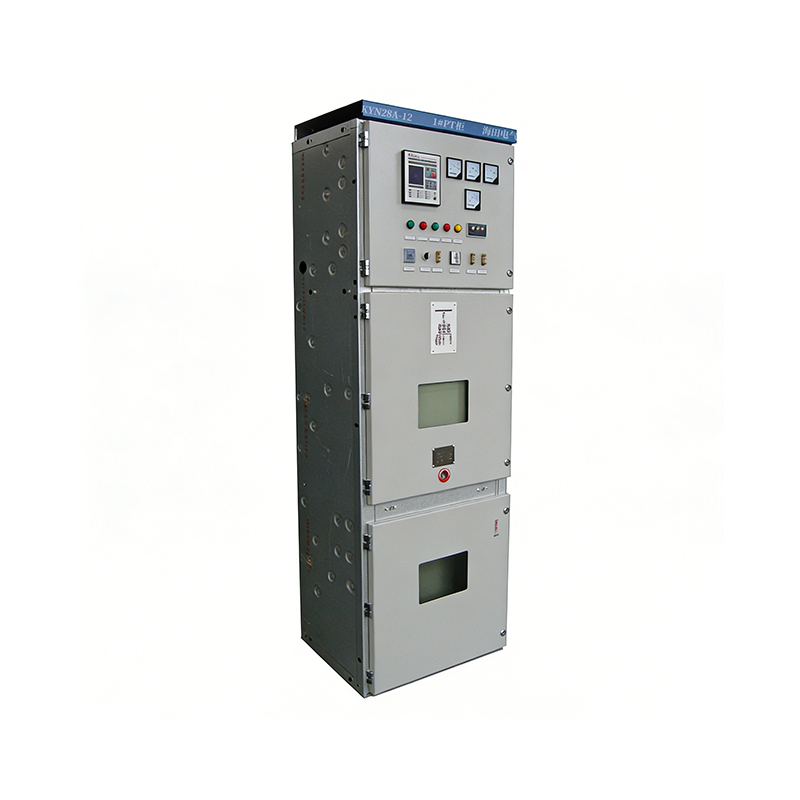 KYN28 Medium-Mounted High-Voltage Switchgear for Distribution SystemsMetal-armored removable switchgear with handcart breakers, five-prevention interlocks and integrated protection, suited to high-voltage distribution in industrial, substation and building settings.View Product →
Interruption technology matters too. Vacuum interrupters have largely replaced older media in medium-voltage gear because they interrupt quickly, need little maintenance and avoid the gas-handling questions that come with sulphur hexafluoride. Whatever the technology, the practical test stays the same: can the equipment be operated, inspected and maintained with the doors closed?
Whether a project uses dry-type or liquid-filled equipment is usually decided early, and it has a direct bearing on safety. Inside a building, a tunnel or a deck where a fire would be hard to fight, dry-type transformers remove the oil that would otherwise feed a blaze, and cast-resin windings tolerate the humidity swings of coastal sites reasonably well. Oil-immersed units remain the outdoor workhorse at higher ratings, where their cooling behaviour and cost per kVA are hard to beat — provided bunding, fire separation and oil monitoring are done properly.
Enclosure material is the other half of the story. Powder-coated or stainless-steel casings are not cosmetic upgrades; on a quayside or in a chemical plant, they are what keeps the insulation system dry enough to do its job. If you are weighing the two approaches for a fire-sensitive location, our note on why dry-type transformers are becoming standard in fire-sensitive installations goes through the trade-offs in more detail.
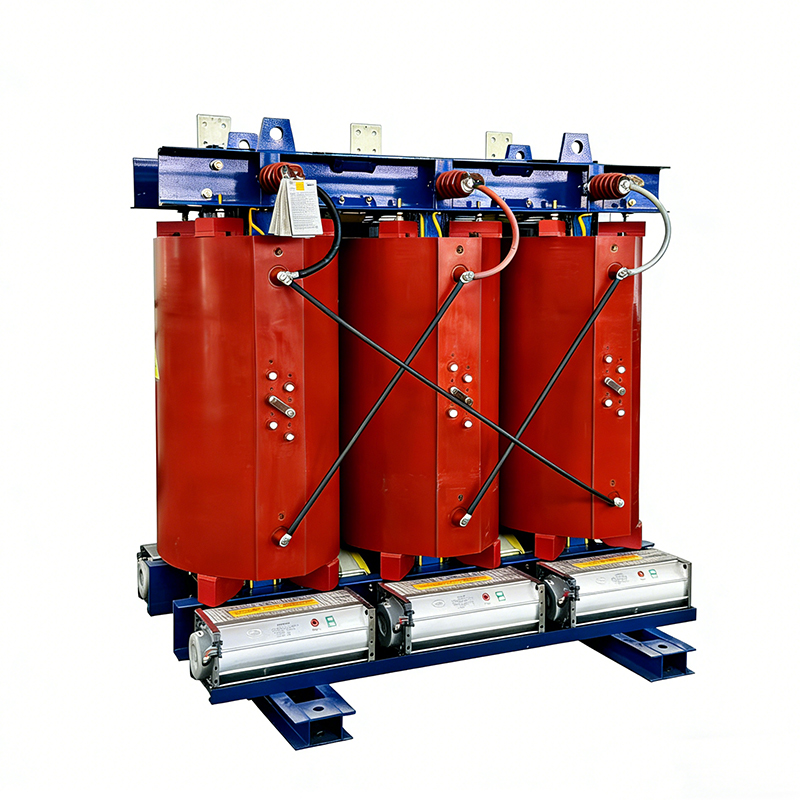 SC(B)10 Dry-Type Distribution Transformer for Indoor SubstationsEpoxy-cast dry-type transformer with low loss and noise, maintenance-free operation, and SC(B)10 parameters for compact indoor distribution and urban substation installations.View Product →
Safety claims are only as good as the tests behind them. For low-voltage assemblies, IEC 61439 sets out the design and routine verification requirements. Medium-voltage switchgear follows the IEC 62271 series, with arc-resistant designs classified under IEC 62271-200, while GB 7251 and GB 3906 apply in the Chinese market. Transformers answer to IEC 60076 and its national counterparts.
When you review a supplier's package, these are the documents that carry real weight:
A folder of certificates is not paperwork for its own sake. It is evidence that someone has already tried to break the equipment so that your operators do not have to.
Equipment only does part of the work. Most incidents involve an action taken by a person, which is why the routines around the gear matter as much as the gear itself. The practices that consistently make a difference are simple:
None of that needs exotic technology. It needs a schedule, a written procedure, and someone with the authority to stop work when something does not look right.
Ships and offshore platforms compress every safety problem into a smaller space. There is no room for a wide arc flash boundary, no easy route for hot gases, salt-laden air attacks insulation and enclosures, and vibration works fasteners loose over time. Equipment for these environments is built to classification rules and IEC standards, with derated temperature rises to suit higher ambient temperatures and extra measures against moisture and mechanical shock.
Cooling shapes the design more than anything else. In a machinery space with limited airflow, a water-cooled transformer moves heat out of the compartment instead of relying on natural convection, keeping winding temperatures within limits without turning the room into a fan gallery.
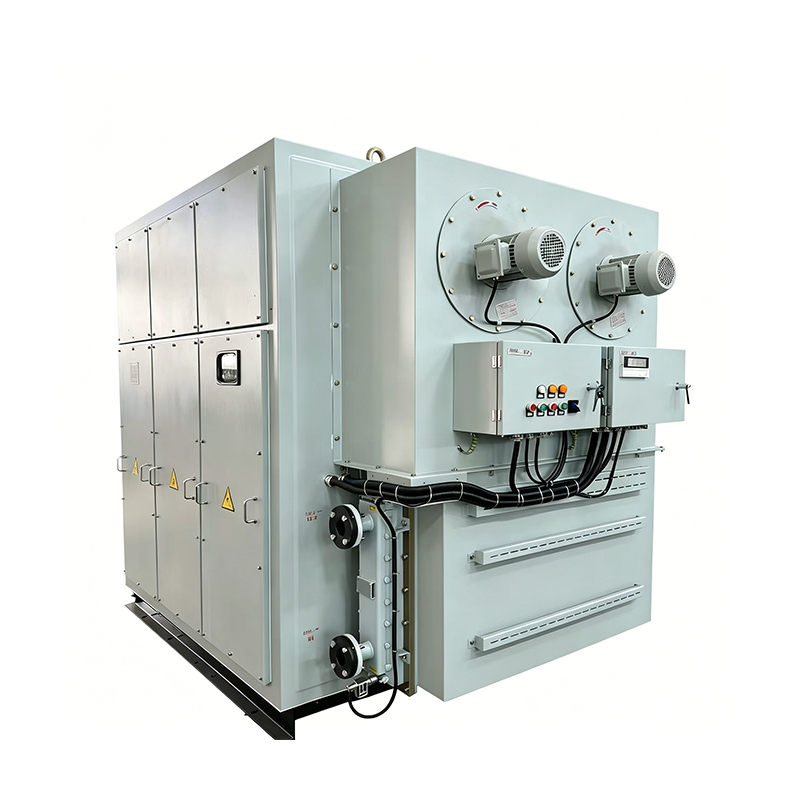 Marine Water-Cooled Transformer for Ships and Offshore PlatformsShipboard water-cooled transformer with salt-spray, mold and humidity resistance, designed for confined marine power distribution where airflow is limited and reliable, low-loss operation is needed.View Product →
We have been building transformers since the days of the Taizhou Transformer Works in 1958. Switchgear and packaged substations came later, as customers asked for the whole distribution chain rather than a single box. Today the range covers oil-immersed and dry-type transformers up to 35 kV, GGD low-voltage and KYN28 medium-voltage switchgear, American- and European-style box substations, and marine units for shipyards and offshore projects.
What that history teaches is unglamorous: safety is mostly about consistency. The same interlock logic on every panel. Routine tests genuinely performed on the unit that ships. Documentation a maintenance engineer can still read five years later. Our quality, environmental, occupational health and energy management systems are certified to ISO 9001, ISO 14001, GB/T 28001 and ISO 50001, and our marine products hold classification society approvals — not because certificates make equipment safe on their own, but because they show the checks were carried out. You can see how we put these pieces together in project solutions. If you are specifying new gear or retrofitting an older electrical room, send us the single-line diagram and a description of the site, and we will tell you honestly what the risks look like.
Switchgear safety is not a product you buy once. It is a habit shared by the people who design the equipment, the engineers who install it, and the technicians who open the door years later. Get the design right, keep the routines boring and repeatable, and the equipment will quietly do its job for decades.

The KYN28 medium-mounted high voltage switchgear adopts a metal armored, removable enclosed structure. The switchgear has clear internal compartments and reliable safety performance. The switchgear is...
See Details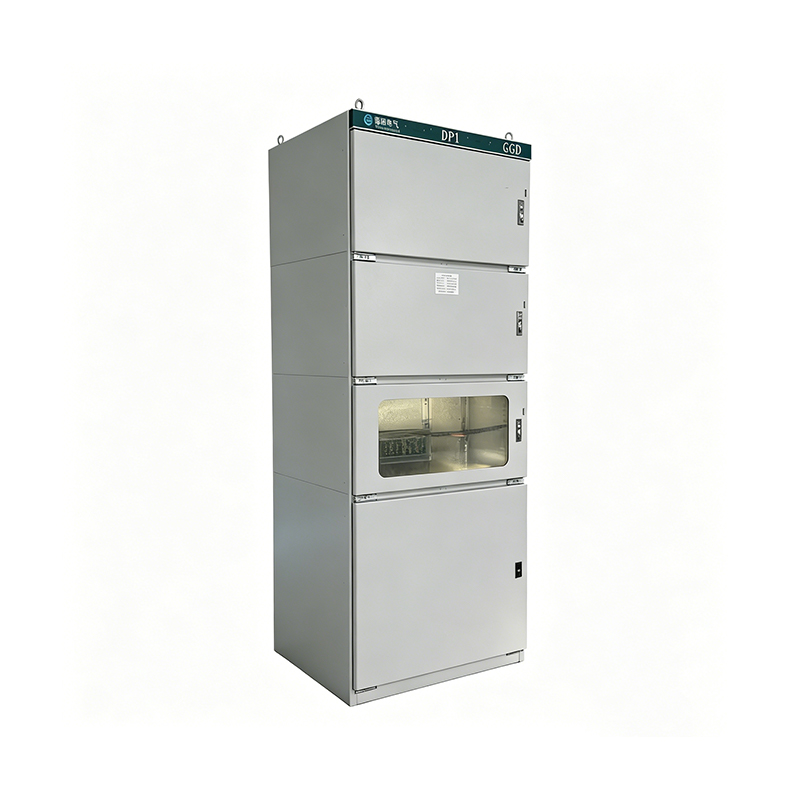
The GGD low-voltage switchgear is a low-voltage distribution device with a reasonable structural design, high breaking capacity, and reliable breaking performance. The switchgear is equipped with a co...
See DetailsHey! Interested in staying in the loop? Sign up for our updates. We won't spam you, pinky promise.

Taizhou Haitian Electric Manufacture Co., Ltd.
