 English
 русский
 Français
 Español
 عربى
A laminated core distribution transformer is a classic power device applied to voltage conversion and power transmission. This transformer enjoys mature technical performance, high operation reliabili...
See Details

Content
A transformer nameplate never argues with you. It states what the unit is, how it is connected, and what it can safely do, and when the connection is delta-wye, a few small characters on that plate decide whether the transformer behaves as a well-mannered piece of distribution equipment or as a source of circulating currents and unbalanced voltages.
This guide walks through the delta-wye information printed on a nameplate, field by field, in roughly the order an engineer actually reads it. It draws on more than five decades of transformer manufacturing experience, so you can check a plate with confidence whether you are commissioning new equipment, tracing a fault, or matching a replacement unit.
Delta-wye is the connection most people picture when they say "distribution transformer," and the nameplate usually spells it out with a compact code such as Dyn11 or Dyn1. In this configuration the primary winding is connected in delta while the secondary is connected in wye, which delivers two useful properties at once: a neutral point on the low-voltage side and a low-impedance path for triplen harmonics that would otherwise distort the secondary voltage.
The delta primary also means there is no neutral terminal on the high-voltage side. If a nameplate lists a single primary voltage value with no Y symbol beside it, the primary is almost certainly delta connected, and the number shown is a line-to-line rating. The wye secondary, by contrast, normally has a neutral brought out to a terminal marked X0, and that neutral is what makes the unit suitable for mixed single-phase and three-phase loads.
Vector groups you will commonly see printed beneath the connection diagram include:
A straight number such as 12470 means the winding is rated line to line, which is typical of a delta primary. When you see a notation like 12470Y/7200, the letter Y tells you the winding is wye connected, the first number is the line-to-line voltage, and the second is the line-to-neutral voltage. On a delta-wye nameplate you should expect to find the Y on the secondary side and a plain number on the primary side. If the plate shows a Y on both sides, you are looking at a wye-wye unit rather than a delta-wye one.
H designates the high-voltage, or primary, terminals and X designates the low-voltage, or secondary, terminals. Where a neutral is brought out it is marked H0 or X0. The small schematic diagram printed on the plate shows exactly how the windings are arranged internally, and it should always be read together with the vector group code, because the code alone does not tell you whether the neutral is internally grounded, brought out to a bushing, or left floating.
The clock number at the end of the vector group code describes the phase displacement between primary and secondary voltages in multiples of 30 degrees. A Dyn11 unit has its secondary lagging the primary by 30 degrees, since 11 multiplied by 30 equals 330 degrees, or minus 30 degrees. Dyn1 describes a 30-degree displacement with the opposite lead-and-lag sense, and that difference matters the moment two transformers must be paralleled.
The vector group is only the headline. The remaining fields on the plate describe how much power the unit can carry and under what conditions, and they must be read as a set rather than one at a time.
| Nameplate Field | What It Tells You | Why It Matters on a Delta-Wye Unit |
|---|---|---|
| kVA rating | Apparent power the unit can deliver continuously at rated voltage and temperature rise. | Paralleled units share load in proportion to kVA only when impedance also matches. |
| Primary and secondary voltage | Line-to-line values, with phase-to-neutral values added where a wye neutral exists. | The 30-degree shift means the secondary cannot be paralleled with a delta-delta unit. |
| Vector group | Letters and clock number showing winding connections, neutral arrangement, and phase shift. | This is the first field to match when ordering a replacement. |
| Percent impedance | Voltage drop at rated current, expressed as a percentage of rated voltage. | Mismatched impedance causes uneven load sharing and unexpected circulating current. |
| Tap positions | Range of voltage adjustment, typically plus or minus 2 by 2.5 percent. | Taps compensate for a supply that runs high or low without altering the vector group. |
| Temperature rise | Winding or oil temperature rise above ambient at rated load, often 55 or 65 degrees Celsius. | It sets the ceiling for how much continuous overload the insulation system can tolerate. |
| Cooling class | Codes such as ONAN or ONAF showing how heat leaves the unit. | Extra cooling can raise capacity, but ratings still apply at the nameplate condition. |
| Serial number and year | Manufacturer traceability data. | Needed when you request the original routine test report and loss figures. |
Tap positions deserve a second look on delta-wye distribution units, because a tap changer that adjusts voltage under load behaves very differently from one that must be de-energized first. An off-circuit tap changer is set once during commissioning; an on-load tap changer corrects voltage continuously as the supply or the load drifts, which is valuable on long feeders where the secondary voltage swings during the day.
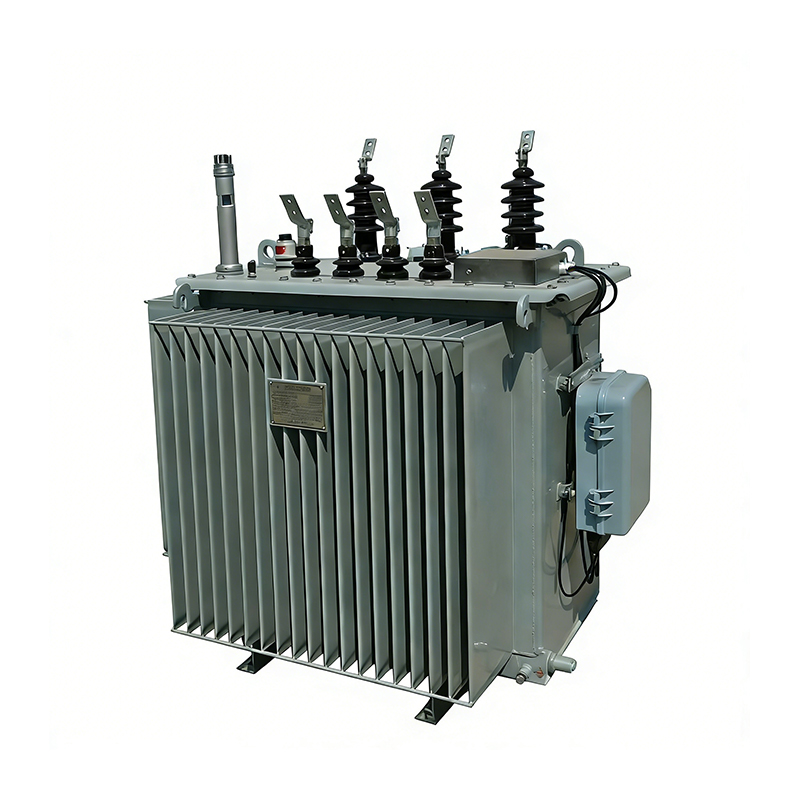 Oil-immersed On-load Tap-changing Distribution TransformerThe oil-immersed on-load tap-changing distribution transformer adopts a high-quality laminated silicon steel core and oxygen-free copper windings with a stable structu...View Product →
Every oil-immersed and dry-type unit that leaves our works carries the vector group, voltage notation, and impedance marked in the same order described above, because a nameplate that follows a consistent convention saves maintenance teams real time. Our range of dry-type distribution transformers is routinely supplied with Dyn11 markings for fire-sensitive indoor installations where a cast-resin design is preferred, while the oil-immersed side of the catalogue covers the classic distribution duties found on utility networks and industrial plants. If you want background on how the oil-immersed design behaves over its service life, this article on how an oil-immersed transformer works and how long it lasts is a useful companion to the plate itself.
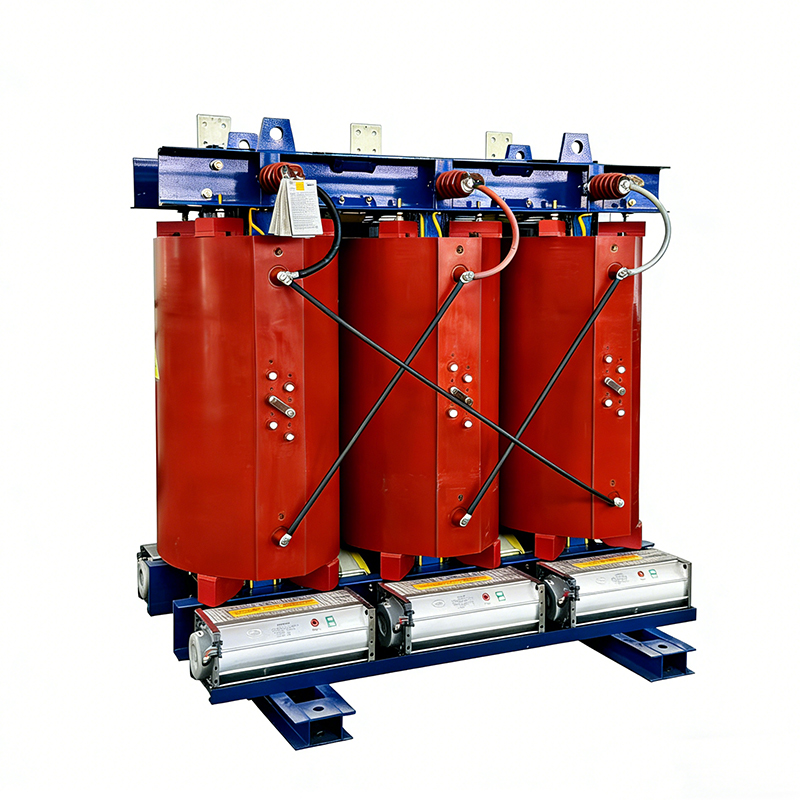 Dry-type Distribution TransformerThe dry-type distribution transformer adopts an epoxy resin cast insulation structure, which is non-toxic, flame-retardant, safe, and environment-friendly with high me...View Product →
Vessels and offshore platforms read delta-wye nameplates the same way, but the surrounding conditions change what the plate must guarantee. Restricted compartments, vibration, salt-laden air, and the absence of generous natural ventilation push designers toward water-cooled construction, and a Dyn11 secondary with a solidly grounded or impedance-grounded neutral keeps the ship service distribution simple. Our marine series follows this convention, and each unit is marked with the vector group and impedance so that a classification surveyor can verify the connection on the spot.
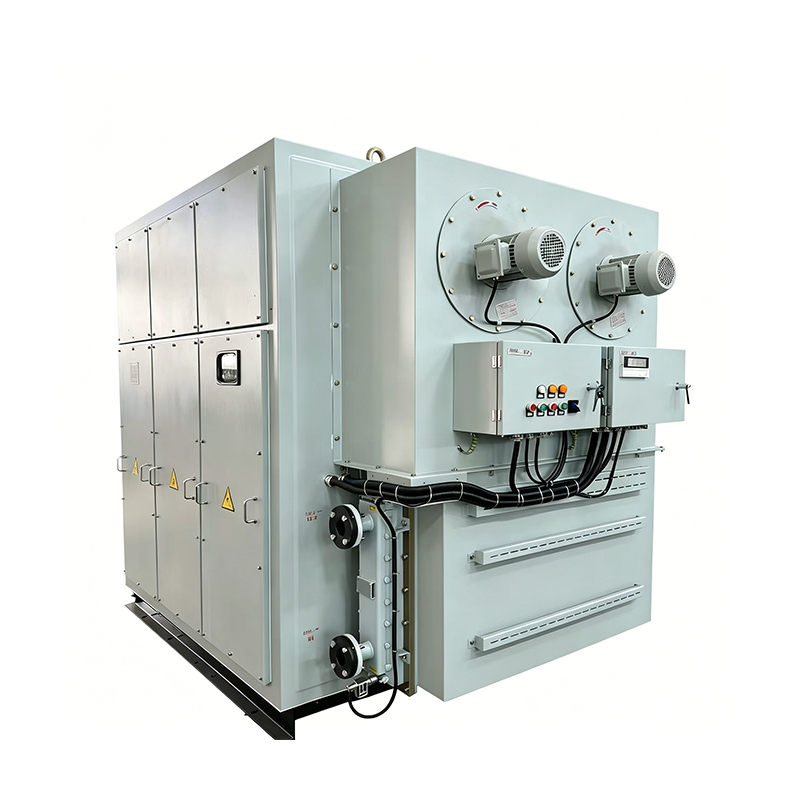 Marine Water-cooled TransformerMarine water-cooled transformer is a new type of ship power distribution terminal equipment independently developed by Taizhou Haitian Electric Manufacturing Co., Ltd....View Product →
When the original unit is beyond repair, the nameplate becomes the specification. Work through it in this order and you will avoid most of the surprises that follow a wrong replacement order:
If the plate is missing or unreadable, do not guess. Impedance, vector group, and temperature rise cannot be inferred from physical size alone, and a unit matched on kVA while ignoring the connection will either refuse to parallel or circulate current from the moment it is energized.
It describes a delta-connected primary winding, a wye-connected secondary winding with an accessible neutral, and a 30-degree phase displacement between the two, expressed as clock position 11. It is the most common vector group for distribution service transformers.
Yes, on the secondary side only. The wye secondary provides a neutral point, usually marked X0, while the delta primary has no neutral terminal at all. That asymmetry is precisely what the nameplate is telling you.
Two transformers with different clock numbers produce secondary voltages that are out of phase. Paralleling them creates a large circulating current through the windings even with no load connected, so the vector groups must match before any paralleling is attempted.
A delta-wye nameplate rewards a careful reader. The vector group tells you how the windings relate, the voltage notation tells you which side carries the neutral, and the rating fields tell you how far the unit can be pushed. Read them together, and the plate stops being a stamped metal label and becomes a working document you can rely on for the life of the transformer.
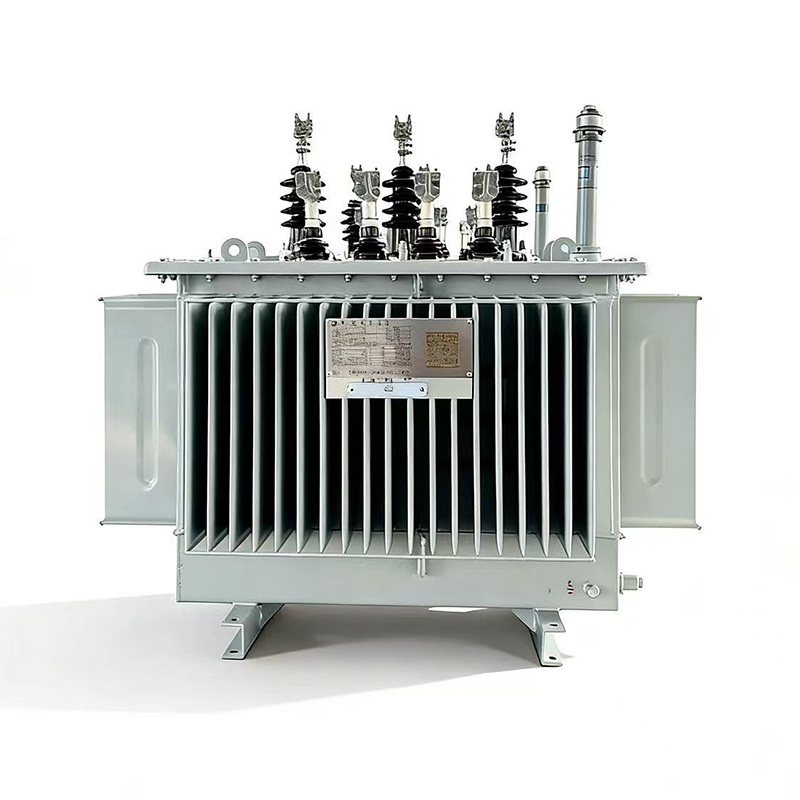
A laminated core distribution transformer is a classic power device applied to voltage conversion and power transmission. This transformer enjoys mature technical performance, high operation reliabili...
See Details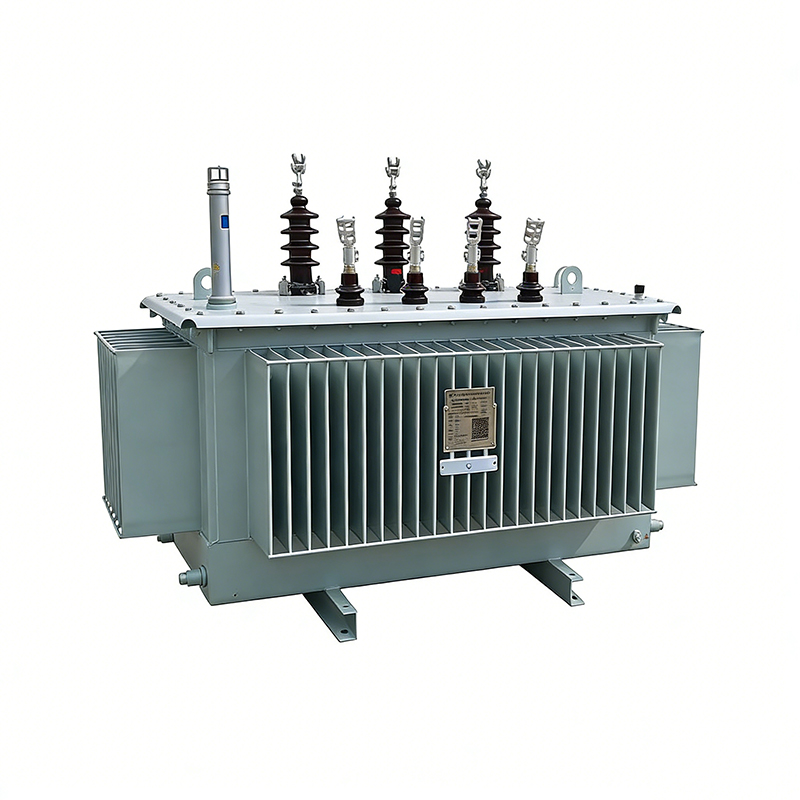
The amorphous alloy non-distribution transformer adopts an iron-based amorphous alloy wound core and a fully sealed oil-immersed corrugated oil tank structure. This transformer features extremely low ...
See Details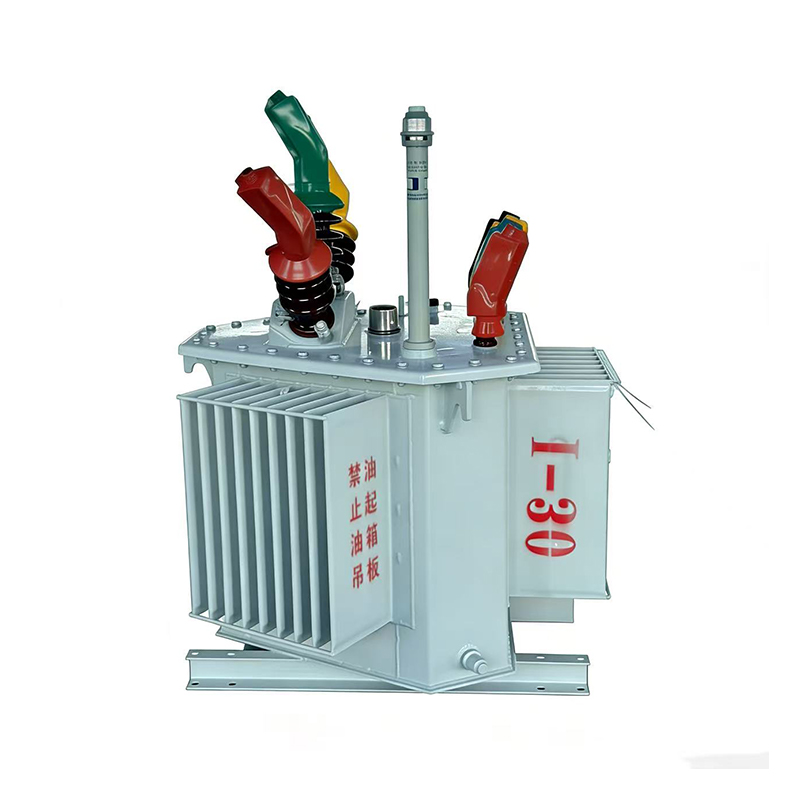
Three-dimensional Wound Core Distribution Transformer. The oil-immersed three-dimensional wound core distribution transformer adopts high-quality cold-rolled oriented silicon steel sheets formed throu...
See Details
The oil-immersed on-load tap-changing distribution transformer adopts a high-quality laminated silicon steel core and oxygen-free copper windings with a stable structure and strong short-circuit resis...
See DetailsHey! Interested in staying in the loop? Sign up for our updates. We won't spam you, pinky promise.

Taizhou Haitian Electric Manufacture Co., Ltd.
